Voyage of The Paupers


Discussion   Join  


Contents:
Three Calls: Ya, ‘Ayyu and Ha 
Al in Al-Fuqarā'u ('The' Paupers)  
Voyage: Ila Allahi (Towards Allah) 
Chasm: Hamza 
Wa-Allahu+Hu-Wa: Cyclic Generator 
Poverty for Knowledge  


See Also
http://www.untiredwithloving.org/allah.html


Note: 'I'rab (Grammar of Inflections) based upon "A Dictionary of Grammatical Analysis of The Holy Qur'an" by Sheikh Dr. Muhammad Sayed Tantawi of Al-Azhar 


Fugue (state of altered consciousness

Altered Glance 1:
It is the knowledge of Awām (General Servants) that:


6:2.  Huwa Al-Ladhi (IT (is) that which)  created you Min (From) clay

هُوَ الَّذِي خَلَقَكُمْ مِنْ طِينٍ


Altered Glance 2
:
However it is the knowledge of Khawās (Exclusive Servants) that:


30:54. Allahu Al-Ladhi (That Which) created you Min (From) weakness

اللَّهُ الَّذِي خَلَقَكُمْ مِنْ ضَعْفٍ


As clay is a substance found on the crust of the planet, 'weakness' is an exotic spiritual substance found in Malakut (Spiritual Realm) from BOTH the entirety of humanity, either as a collective or individual, is manufactured.


Allah did not mention such creation based upon Weakness for any other creature, angels or an amoeba, however it is exclusively and explicitly mentioned for human species thus forming a genus or society called Fuqarā'u (Paupers) with individual member called Faqir (Pauper):

35:15. Ya-Ayyu-Ha (O) The people you are  Al-Fuqarā'u (Paupers) Ilā (Towards) Allah

يَا أَيُّهَا النَّاسُ أَنْتُمُ الْفُقَرَاءُ إِلَى اللَّهِ وَاللَّهُ هُوَ الْغَنِيُّ الْحَمِيدُ


Incredible feelings of helplessness, backbreaking pressure under scantiness, throes of ailments, or loss of parents children and loved ones, are all fuel or energy-forms that propel the servants towards Allah, in a ceaseless voyage, gliding upwards towards Allah.

Other creatures are also needy or have weakness, but of a different sort, the Weakness that human species is made from fuels a spiritual journey while the weakness of animals and other creatures endeavours nothing towards Allah:


تفسير روح البيان في تفسير القرآن/ اسماعيل حقي (ت 1127 هـ)
قال بعض الكبار ان الله تعالى ما شرّف شيئا من المخلوقات بتشريف خطاب انتم الفقراء الى الله حتى الملائكة المقربين سوى الانسان وذلك ان افتقار المخلوقات الى افعال الله تعالى من حيث الخلق ونحوه وافتقار الانسان الى ذات الله وصفاته فجميع المخلوقات وان كانت محتاجة الى الله تعالى لكن الاحتياج الحقيقى الى ذات الله وصفاته مختص بالانسان من بينها


Three Calls: Ya, ‘Ayyu and Ha   


When the human being is formed into a fetus, he enrobes the gown of biological materials and processes and as such severe amnesia caused, and for that matter he is called Insan a noun derived from the verb Nasiya meaning forgot:


36:78  Wa Nasiya (Forgot) his own Creation

وَنَسِيَ خَلْقَهُ

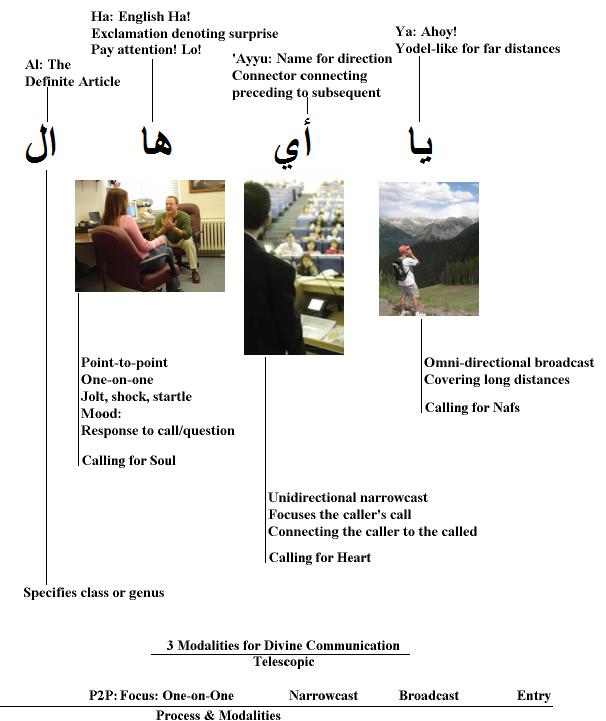
In order to remind him again, a call is made Ya-Ayyu-Ha, this call starts with the letter Ya ('y' in Arabic) which indicates continuation (Madd) in present tense i.e. there is no past or future to this call, it is called constantly in present-tense form. It is not preceded with Qul (Say) i.e. it has no caller, a cosmos-wide call free of any caller.


Lisanul Arab
Yā (O) is the ‘operator/tool’ word/name for calling and addressing. Ya is in the place of a verb acting upon a name i.e. a virtual verb. There are other such names/words e.g. Hal (Whether?), Ma/La (Negation) and Illa (Other than, except) that substitute for some verbs, in their case the action of the verb is not felt by the following words, but Ya is not like them—Ya does act upon what follows. In ‘Ya Zaid’ or ‘O Zaid’ actually the Ya does act upon the Zaid, and the occasion/state of the acting is that of addressing/calling. When you say ‘I hit Zaid’ it is true that the ‘hit’ does act upon the Zaid but not its letters ‘h’ ‘i’ ‘t’ they have nothing to do with the physicality of hitting, these are mere alphabetic representations of an actual act. (Ya (O) as a sound does impact the person it addresses and the person turns around in attention!)

لسان العرب  ابن منظور
يا

حَرْفُ نِداء، وهي عامِلةٌ في الاسم الصَّحِيح وإِن كانت حرفاً، والقولُ في ذلك أَنَّ لِيا في قيامِها مَقامَ الفعل خاصةً ليست للحروف، وذلك أَنَّ الحروفَ قد تَنُوبُ عن الأَفعال كهَلْ فإِنها تَنُوبُ عن أَسْتَفْهِمُ، وكما ولا فإِنهما يَنْوبانِ عن أَنْفِي، وإِلاَّ تَنُوبُ عن أَسْتَثْني، وتلك الأَفعال النائبةُ عنها هذه الحروفُ هي الناصِبة في الأَصل، فلما انصَرَفَتْ عنها إِلى الحَرْف طَلَباً للإِيجاز ورَغْبةً عن الإِكثار أَسْقَطْتَ عَمَلَ تلك الأَفعال ليَتِمَّ لك ما انْتَحَيْتَه من الاختصار، وليس كذلك يا، وذلك أَنَّ يا نفسَها هي العامِلُ الواقِعُ على زيد، وحالُها في ذلك حال أَدْعُو وأُنادي، فيكون كلُّ واحد منهما هو العامِل في المفعول، وليس كذلك ضَرَبْتُ وقَتَلْتُ ونحوه، وذلك أَنَّ قَولَكَ ضَرَبْتُ زيداً وقتَلْتُ بِشْراً العامِلُ الواصِلُ إِليهما المُعَبَّرُ بقولك ضَرَبْتُ عنه ليس هو نَفْسَ ض ر ب ت، إِنما ثَمَّ أَحْداثٌ هذه الحروف دِلالةٌ عليها، وكذلك القَتْلُ والشَّتْمُ والإِكْرامُ ونحوُ ذلك، وقولُك أُنادي عبدَ اللهِ وأُكْرِمُ عبد الله ليس هنا فعلٌ واقعٌ على عبدِ الله غير هذا اللفظِ، ويا نفسُها في المعنى كأَدْعُو، أَلا ترى أَنك إِنما تذكر بعد يا اسماً واحداً، كما تذكُره بعد الفِعْلِ المُسْتَقِلِّ بفاعِلِه، إذا كان مُتَعَدِّياً إِلى واحد كضربت زيداً؟ وليس كذلك حرفُ الاستفهام وحرفُ النَّفْي، وإِنما تُدْخِلُها على الجملة المستقلة، فتقول: ما قامَ زيد وهل زيدٌ أَخوك، فلما قَوِيَت يا في نفسها وأَوْغَلَتْ في شَبَهِ الفعل تَوَلَّتْ بنفسها العمل؛

Dara
The Ya (O) that exited from the mouth of our beloved Prophet, peace be upon him, is heard by all, specially the disbelievers, without the buffer and the interpretation of the alphabet and words i.e. it is an address echoed around the spacetime, reaching everyone as the Sayyid (Master) called out Ya! 

For example, if a Frenchman falls off a building and screams, I, as a non-French speaker, still fully hear and grasp the gravity of the circumstance and act accordingly. Such is what happened to the disbelievers of Quraish when the Prophet called out Ya (O), sword unsheathed.   


Isfahani (Mufradat)
Ya (O) is the word/name for calling/addressing; it is used for long distances. If used for Allah e.g.‘Ya (O) Allah’ it reflects an awareness in the caller that s/he is far from the aid and help of Allah (unless Allah comes close to help).


Dara
That is why in the Qur’an you don’t find the Prophet uttering the expression ‘Ya Rabbi’, as he was already very close to Allah; instead the phrase was given to him in the compressed form: "Qul Rabbi", and not "Qul Ya Rabbi".


مفردات ألفاظ القرآن. - للأصفهاني

ياء
يا حرف الندا, و يستعمل في البعيد و إذا استعمل في الله نحو: "يا رب" فتنبيهٌ للداعي أنه بعيدٌ من عون الله و توفيقه


Lisanul Arab
Ayyu is a name for directionality.

لسان العرب  ابن منظور
 أَيّ
فإِنه جعل أَيّ اسماً للجهة، فلما اجتمع فيه التعريف والتأْنيث منعه الصرف
،


Isfahani (Mufradat) 
Ayyu is a word that delivers a notice that what follows it is the explanation of what preceded it. 

مفردات ألفاظ القرآن.  - للأصفهاني
كتاب الألف
أي
-كلمة ينبه بها أن ما يذكر بعدها شرح وتفسير لما قبلها.


Lisanul Arab
Ha is a word to focus the attention and raise the awareness of the person called. Much has been said about this e.g. Ha-Dha is for the near and Dha for the far. As has been narrated from the Imam Ali: "Ha indeed here there is a specialized ‘Ilm (Knowledge), signaling with a motion towards his bosom". Ha in its truncated form is a word that raises the attention and the awareness of the called person e.g. Ha Al Salamu Alaikum, to make bring attention and emphasis that Salaam was made to someone. 

Ya is a call from afar, without Ayyu (Directional Focus) it cannot be applied to a definite name i.e. a name with the prefix Al (The); therefore Ayyu is necessary as the immediate follower of the Ya, however Ha is used additionally in order to serve as a reply/reaction to the caller calling from afar. 

لسان العرب  ابن منظور
ها

يعني إذا الذي، وها كلمة تنبيه، وقد كثر دخولها في قولك ذا وذِي فقالوا هذا وهَذِي وهَذاك وهَذِيك حتى زعم بعضهم أَنَّ ذا لما بَعُدَ وهذا لما قَرُبَ. وفي حديث عليّ، رضي الله عنه: ها إِنَّ هَهُنا عِلْماً، وأَوْمَأَ بِيَدِه إِلى صَدْرِه، لو أَصَبْتُ له حَمَلةً؛ ها، مَقْصورةً: كلمةُ تَنبيه للمُخاطَب يُنَبَّه بها على ما يُساقُ إِليهِ مِنَ الكلام. وقالوا:ها السَّلامُ عليكم، فها مُنَبِّهَةٌ مؤَكِّدةٌ؛

الأَزهري: سيبويه وهو قول الخليل إذا قلت يا أَيُّها الرجل فأَيُّ اسم مبهم مبني على الضمّ لأَنه منادى مُفْرَدٌ، والرجل صِفة لأَيّ، تقول يا أَيُّها الرَّجلُ أَقْبِلْ، ولا يجوز يا الرجلُ لأَنَّ يا تَنْبيهٌ بمنزلة التعريف في الرجل ولا يجمع بين يا وبين الأَلف واللام، فتَصِلُ إِلى الأَلف واللام بأَيٍّ، وها لازِمةٌ لأَيٍّ للتنبيه، وهي عِوَضٌ من الإِضافة في أَيٍّ لأَن أَصل أَيٍّ أَن تكون مضافةً إِلى الاستفهام والخبر. وتقول للمرأَةِ: يا أَيَّتُها المرأَةُ، والقرّاء كلهم قَرَؤُوا: أَيُّها ويا أَيُّها الناسُ وأَيُّها المؤمنون، إِلا ابنَ عامر فإِنه قرأَ أَيُّهُ المؤمنون، وليست بجَيِّدةٍ، وقال ابن الأَنباري: هي لغة؛


تقول: يا أَيُّها الرَّجُل، وها: قد تكون تلبية؛ قال الأَزهري: يكون جواب النداء،


Razi
Imam Ali: "Ya is for the calling of the Nafs (Self), Ayyu for the calling of the Qalb (Heart) and the Ha calling of the Ruh (Soul)". 

Some said: "Ya is the calling of the absent and Ayyu the calling of the present (persons) and Ha to attract the attention and the focus". 

So ‘Ya Ayyu Ha’ has the semantic: "I called you three times, three different ways and you did not reply; this is nothing but your hidden ignorance ".


تفسير مفاتيح الغيب ، التفسير الكبير/ الرازي (ت 606 هـ)
المسألة الأولى: { ياْ أَيُّهَا } ، قد تقدم القول فيها في مواضع، والذي نزيده ههنا، أنه روي عن علي عليه السلام أنه قال: يا نداء النفس وأي نداء القلب، وها نداء الروح، وقيل: يا نداء الغائب وأي للحاضر، وها للتنبيه، كأنه يقول: أدعوك ثلاثاً ولا تجيبني مرة ما هذا إلا لجهلك الخفي


Al-Khawarizmi
From Ya to Ayyu to Ha is like going in gradations and stages from ambiguity to clarity, or gliding from allusion to declaration of frankness. 

Dara: The call from the other universe to the Prophet to Qul (Say): Ya+Ayyu+Ha (O+‘focal-you’+‘pay attention’) indicates several things:

1.    The call has traveled through several universes, in stages from one to the other, to arrive to the heart and tongue of the Prophet
2.    As Imam Ali indicated the entire spiritual and cognitive faculties of people are called by this complex call
3.    There is a process to this call, stage after stage the process delivers the call


بيان الإعجاز
ابي الفتح ناصر بن ابي المكارم عبد السَّيد ابن علي المُطَرِّزي الخوارِزمي(610 هجري)
و منها التدرجُ من الإبهامِ إلى التوضيح, و الترقِّي من التعريضِ إلى التصريحِ.


Al (Definite Article) in Al-Fuqarā'u ('The' Paupers)

Baidhawi
"Ta'rif (Addition of the Al article to make definite) indicates the intensity and exaggeration of the human Iftiqar (Poverty) due to their immense neediness (i.e. their nature is needy) while the Iftiqar of the other creatures are only an Idhafa (Annexation) to them (i.e. not the nature of their creation)."


 تفسير انوار التنزيل واسرار التأويل/ البيضاوي (ت 685 هـ)
{ يٰأَيُّهَا ٱلنَّاسُ أَنتُمُ ٱلْفُقَرَاءُ إِلَى ٱللَّهِ } في أنفسكم وما يعن لكم، وتعريف الفقراء للمبالغة في فقرهم كأنهم لشدة افتقارهم وكثرة احتياجهم هم الفقراء، وأن افتقار سائر الخلائق بالإِضافة إلى فقرهم غير معتد به ولذلك قال:
{ وَخُلِقَ ٱلإِنسَـٰنُ ضَعِيفاً }


Zumukhshari
"If you asked: "Why did Allah made the paupers "THE paupers", by addition of Al", I would say: due to their intense neediness and poverty they form a genus of paupers i.e. The Paupers (as a society or collective)."

 تفسير الكشاف/ الزمخشري (ت 538 هـ)
{ يٰأَيُّهَا ٱلنَّاسُ أَنتُمُ ٱلْفُقَرَآءُ إِلَى ٱللَّهِ وَٱللَّهُ هُوَ ٱلْغَنِيُّ ٱلْحَمِيدُ } * { إِن يَشَأْ يُذْهِبْكُـمْ وَيَأْتِ بِخَلْقٍ جَدِيدٍ } * { وَمَا ذَلِكَ عَلَى ٱللَّهِ بِعَزِيزٍ }
فإن قلت: لم عرف الفقراء؟ قلت: قصد بذلك أن يريهم أنهم لشدة افتقارهم إليه هم جنس الفقراء، وإن كانت الخلائق كلهم مفتقرين إليه من الناس وغيرهم، لأن الفقر مما يتبع الضعف، وكلما كان الفقير أضعف كان أفقر، وقد شهد الله سبحانه على الإنسان بالضعف في قوله:
{ وَخُلِقَ ٱلإِنسَـٰنُ ضَعِيفاً }
[النساء: 28] وقال سبحانه وتعالى:
{ ٱللَّهُ ٱلَّذِى خَلَقَكُمْ مّن ضَعْفٍ }


Sullami
"Quoting Bishr Bin Harith: Al-Faqr (Poverty) is a hidden treasure for Mu'min (Believer) like unto the martyrdom no one can obtain it except the one loved by Allah from amongst ITs servants. "
 تفسير حقائق التفسير/ السلمي (ت 412 هـ)
سمعت أبا الفرج يقول: سمعت إبراهيم بن أحمد السياجى يقول: سمعت محمد بن الحسين الخطيب يقول: سمعت العباس بن عبد العظيم يقول: سمعت بشر بن الحارث يقول: الفقر مخزون مكنون للمؤمن مثل الشهادة لا ينالها إلاَّ من أحبه الله من عباده.


Abadi
Elucidation of Sunan Abi Dawoud
"Quoting the Prophet (?): My Lord enrich me with Iftiqar (Poverty) towards You and do not make me poor by (false) needlessness away from You. "

عون المعبود، شرح سنن أبي داوود، - للآبادي
[كتاب الصلاة] >> 508 - باب في الاستعاذة
الفقر إلى الله المشار إليه بقوله: اللهم اغنني بالافتقار إليك ولا تفقرني بالاستغناء عنك،


Voyage: Ila Allahi (Towards Allah)

Baqli
"The Fitra (Composite Inmost Innate Design) of the humanity is motile from the Al-Ghayb (Realm of Unseen Divine Secrets) towards the Azal (Sempiternity) coerced so by the nature/characteristic of Iftiqar (Poverty) like unto the gravitating pull of the steel towards the magnet; for humanity they are pulled as such by the nature/characteristics of the Ishq (Unary Unrestrained Love) and by the nature of the Ashiq's (Lover's) Iftiqar (Poverty, Neediness) towards Ma'shuq (Beloved)"


 تفسير عرائس البيان في حقائق القرآن/ البقلي (ت 404 هـ
{ يٰأَيُّهَا ٱلنَّاسُ أَنتُمُ ٱلْفُقَرَآءُ إِلَى ٱللَّهِ وَٱللَّهُ هُوَ ٱلْغَنِيُّ ٱلْحَمِيدُ }
قوله تعالى { يٰأَيُّهَا ٱلنَّاسُ أَنتُمُ ٱلْفُقَرَآءُ إِلَى ٱللَّهِ } فطرة الانسانية وقعت من الغيب مضطربة متحركة الى الازل بنعت الافتقار اليه كانجذاب الحديد الى المغناطيس لانها وقعت بنعت العشق والعاشق مفتقر الى معشوقه انفعالاً فمن عرفه بالازلية والابدية يفتقر اليه افتقاراً قطعيا لان بقاءه لا يكون إلا به واذا كان كذلك صار غنيا بالله متصفا بغناه غنى به عن غيره مفتقراً اليه


Chasm: Hamza (Sudden halt of expiration, or sudden expiration) in state of Raf' ('o' sounding phoneme)

Tajwid (Prononciation) for The Paupers recites as:

Al-Fuqarāāāāāāāāāāāāāāāāāāāāāāāāāāā'u


Where 'u is Hamza in state of Raf' ('o' sounding phoneme), indication of elevation in spiritual complexity and thus renders a JUMP off the chasm (Hamza) into Ila-Allahi (Towards Allah) i.e. the Faqr's (Poverty's) voyage commences or it is a perpetual crossing of a chasm (chasm of being a needy human) towards the Divine Presence of Allah.

Ila-Allahi (Towards Allah) are of Jarr-Majrur (Tugger, Tugged) dynamical nature (motility) i.e. indication of gravitating pull of the humanity towards Allah, hence the ceaseless voyage.


Wa-Allahu+Hu-Wa: Cyclic Generator for Singularities

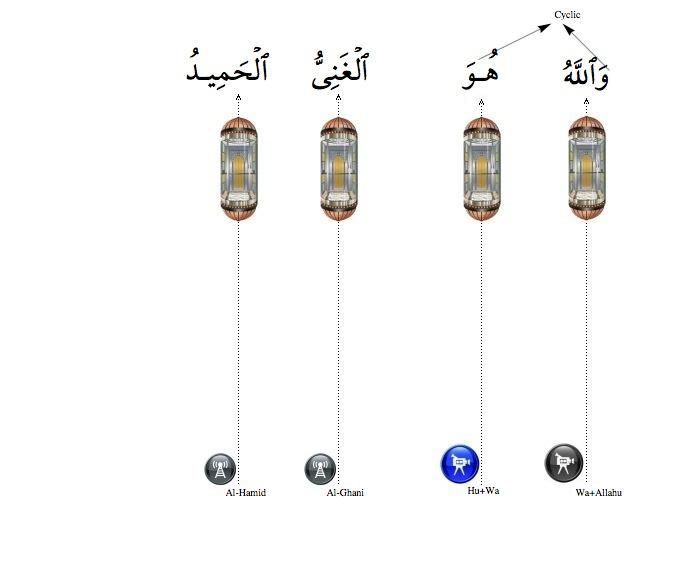
Wa-Allahu+Hu-Wa for a cyclic word starting with Wa and ending with Wa again. This ever-cyclic string of Divine Alphabets form a generator that causes the formation of two Singularities i.e. Al-Ghani (Most Prosperous, Most Needless ) and Al-Hamid (Most Praiseworthy and Perpetually Adored).

This ever-cyclic generator is:

85:13. Inna-hu Hu-Wa starts Wa (And) returns/repeats. 

إِنَّهُ هُوَ يُبْدِئُ وَيُعِيدُ


Remark: Notice the alphabet Wa in between.


Inna (Actualizer) has the noun hu (it) that refers to, points to the fundamental cosmic Surat (Constraint) of a cyclic repetitive autonomous-agent that generates, through its repetitive effects, the Singularities which are the Divine Attributes shaping the very existence of all beings.


The two 'cameras' below are:

1. Wa-Allahu, Mubtada' (The Beginning
2. Hu-Wa, 'Amad i.e. disconnected third person pronoun referring to no entity in the sentence! This Hu-Wa (IT, He, Him) is standalone


Remark: Cameras are the 'cameras' and the 'broadcasts' are the outcomes or what came to be in this case the Divine Attributes as Singularities. Notice the colours of the cameras match the broadcasts, therefore the blue one (Hu-Wa) has no broadcast. (See Also: http://www.untiredwithloving.org/grammar_states.html)


Q: The sentence could have been Wa-Allahu Al-Ghani Al-Hamid, why there is the need for the occurrence of the additional pronoun Hu-Wa that points/refers to no entity in the sentence?

A: From the verse:

85:13. Inna-hu Hu-Wa starts Wa (And) returns/repeats. 
إِنَّهُ هُوَ يُبْدِئُ وَيُعِيدُ


It is clear that the repetitive agent is based upon the Hu-Wa, without Hu-Wa there is no repetitive regeneration of any kind, and therefore the Singularities will not occur.

This cyclic-generator therefore generates the very concept or the existence of Voyage towards Allah e.g. as the repetitive cyclic rotation of the wheel, or the gaited repetitive deforming of a worm or snake, or repetitive deforming of the wings of a bird, or the repetitive criss-cross of the human legs, brings forth the motility with myriad of types of motion.


Poverty for Knowledge, not just for food and drink

Almost in all books and presentations the sort of poverty depicted is that of the daily living, this Rahi (Author) wishes to up the ante and attract the attention of the Murids (Seekers of the Divine) towards human poverty for acquisition of knowledge and proper Aklhaq (Behaviour) while seeking.

Most important Surat (Constraint) of both Mulk (Corporeal Realm) as well as Malakut (Spiritual Realm) is:


2:255. Wa they cannot encompass (to acquire) anything of ITs Knowledge except for whom IT wills

وَلَا يُحِيطُونَ بِشَيْءٍ مِنْ عِلْمِهِ إِلَّا بِمَا شَاءَ


Allah and only Allah gives permission for the servants, no matter who they are, to acquire any of ITs knowledge. That is the real and true definition of Faqr (Poverty) and our definition as the seekers of knowledge i.e. Al-Fuqarā'u (Paupers) or Faqir (Pauper).

Next time you feel famished, or your bank account is near empty, you lost your housing, or lost someone dear, or yearn for someone's love or attention, then stop and think for a moment: Did you ever feel such neediness and poverty facing the Divine Presence yearning for the acquisition of knowledge?

The answer is always NO! except the day you pass on, there might a be chance that you night say a true Yes! Yes I am a pauper a mendicant begging for knowledge from Allah.


© 2010-2002,  Dara O Shayda